

The Brittle Republic: Breaking Tehran’s Endurance Strategy
Why Washington Must Look Past Kinetic Destruction to Target the Institutional Fault Lines of the Regime where the IRGC’s Silent Coup and the Mojtaba Gamble are the Regime’s Greatest Vulnerabilities.

“War is merely the continuation of politics by other means.” — Carl von Clausewitz
I. Introduction
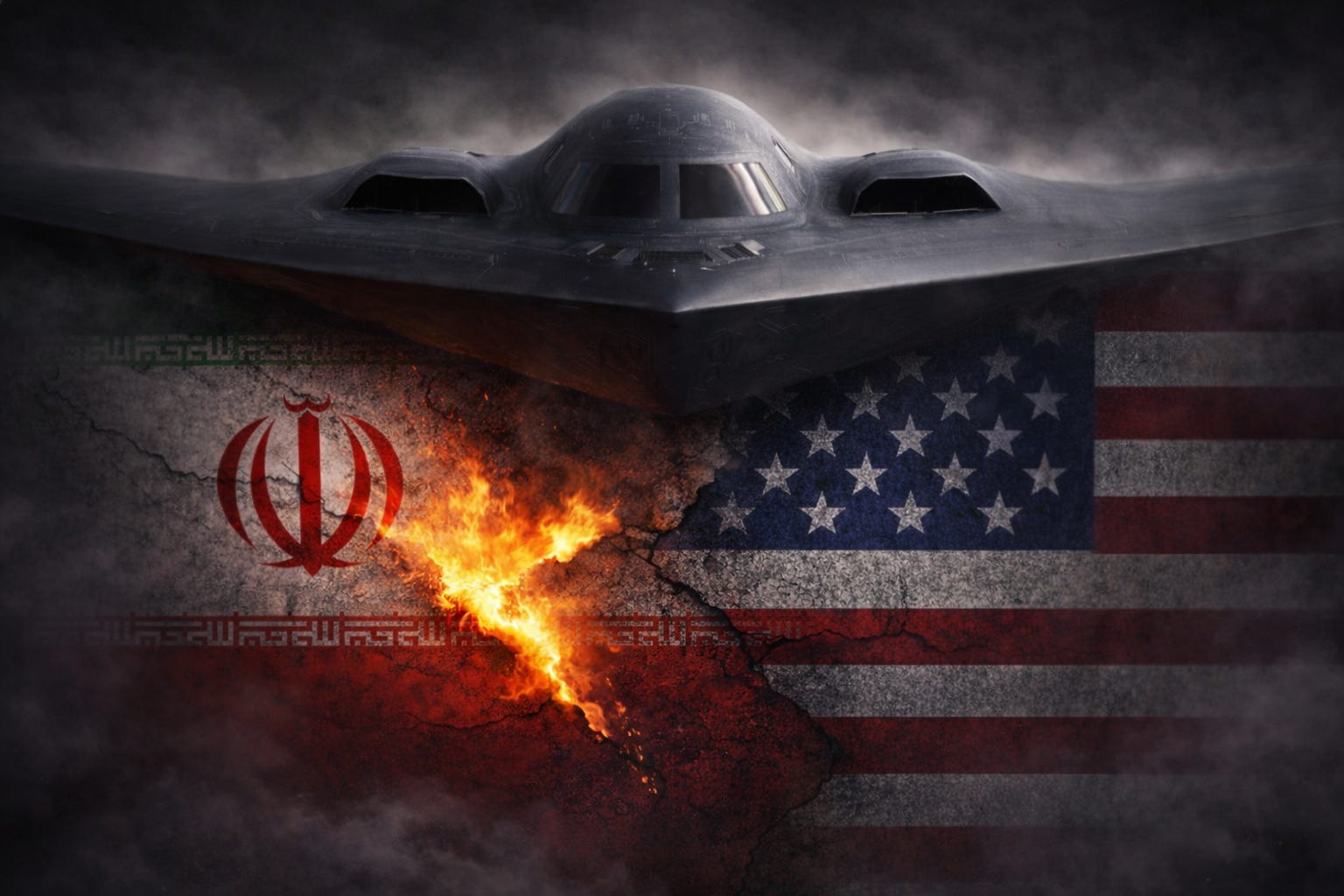
Two weeks into the U.S.–Israel conflict with Iran, the strategic landscape is already shifting from the kinetic to the systemic. The central question is no longer simply what has been destroyed on the battlefield, but whether the strategy guiding the war is achieving its political purpose. In classical Clausewitzian terms, military action is meaningful only insofar as it advances political objectives; tactical destruction alone is never decisive.
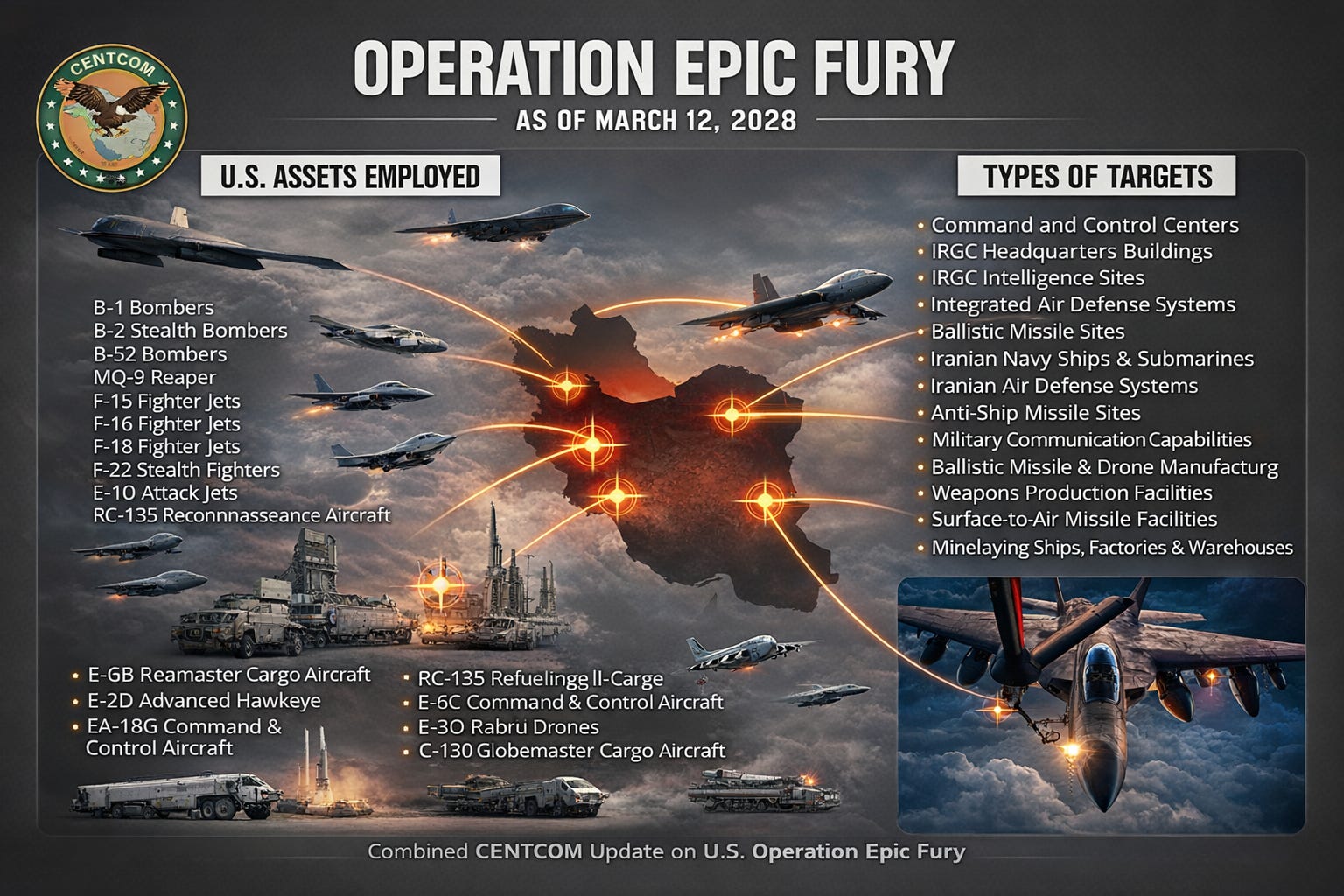
When President Trump authorized Operation Epic Fury on February 28, the objectives were defined with clarity: terminating Iran’s nuclear pursuit, dismantling its missile umbrella, and securing global commerce in the Strait of Hormuz. Early indicators suggest substantial operational effects. U.S. forces have struck more than 6,000 targets, destroyed or damaged over 90 Iranian vessels, and reduced Iran’s ballistic missile launch capacity by an estimated 90 percent. Yet operational success does not automatically translate into strategic victory.
Tehran’s response illustrates why. Rather than mounting a conventional counteroffensive, Iran has adopted a doctrine of strategic endurance—absorbing military punishment while shifting the costs of the conflict onto the global economy. By threatening the disruption of energy flows through the Strait of Hormuz, Tehran seeks to impose economic pressure on the coalition and wait for political fractures to emerge within Western democracies. If Iran’s strategy is endurance, Washington’s must be fracture—targeting not only Iran’s military capabilities but the political and economic architecture that allows the regime to sustain prolonged confrontation.
II. The Tehran Playbook: Survive, Escalate, Endure
Iran’s leadership understands it cannot defeat a U.S.–Israeli coalition in a conventional military contest. Its strategy is therefore political before it is military—seeking to convert battlefield weakness into strategic leverage. In his first public statement after assuming power, Iran’s new supreme leader made clear that the objective is not direct military victory but the fracture of the coalition confronting Tehran. By pressuring Gulf states to expel U.S. forces while threatening disruption of the Strait of Hormuz, the regime is pursuing a strategy of horizontal escalation —shifting the costs of war onto Washington’s regional partners in the hope that coalition cohesion erodes before Iran’s own endurance does. This approach combines:
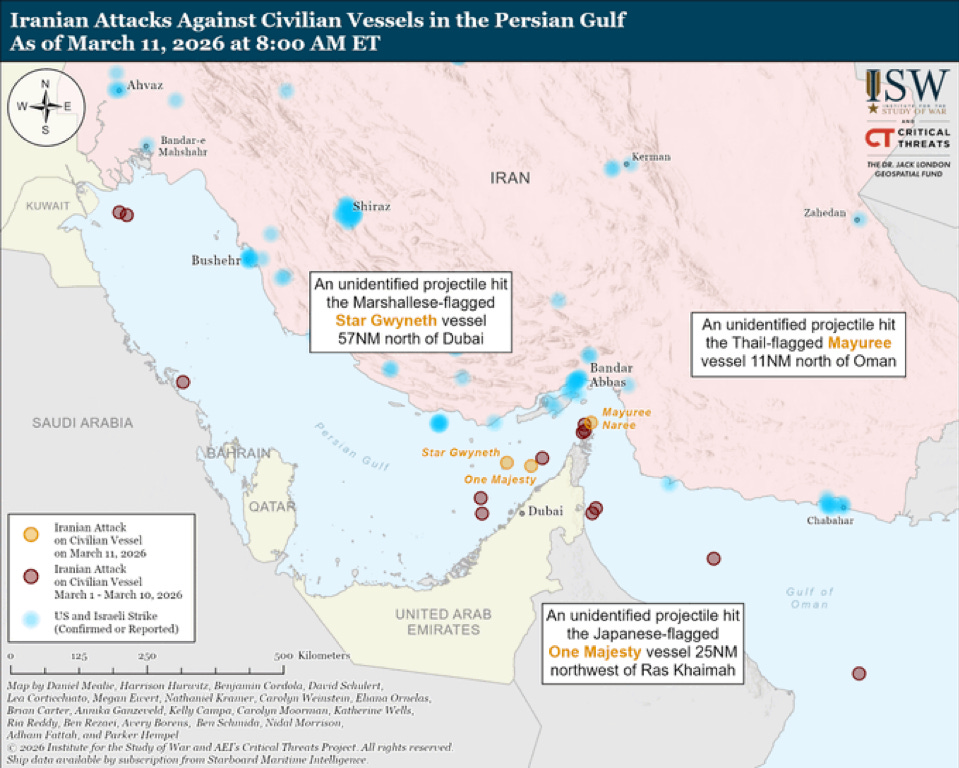
Economic coercion. By threatening the Strait of Hormuz and Gulf energy infrastructure, Iran aims to trigger global energy shocks capable of raising the economic cost of continued conflict.
Regionalization. Strikes on Gulf neighbors and proxy activity expand the war’s geographic scope, including Hezbollah joining Iran's counterattack.
Political attrition. Iranian leaders calculate that Western democracies are less capable of sustaining prolonged conflict once rising energy prices begin to strain domestic political cohesion.
As Iran’s missile and drone capabilities are steadily degraded by sustained strikes, Tehran appears to be shifting further toward disruption rather than direct confrontation. In many ways, the strategy mirrors the asymmetric campaigns Iranian commanders refined in Iraq and Syria—except the battlefield is now the global economy. Attacks on shipping, ports, and energy infrastructure function as economic equivalents of the improvised explosive devices that once targeted U.S. forces in Iraq: relatively inexpensive tools capable of imposing disproportionate strategic disruption.
Geography reinforces this approach. Positioned along the northern shore of the Persian Gulf while its Houthi partners sit astride the Bab al-Mandab, Iran can pressure global trade routes from both sides of the Arabian Peninsula. The leverage of the Strait of Hormuz lies not only in the volume of energy that passes through it but in its control over the marginal supply that stabilizes global energy markets. Roughly one-fifth of globally traded liquefied natural gas transits the strait; while this represents only a small share of total global demand, disrupting that flexible supply can trigger immediate price spikes and supply shocks across Asia and Europe, shifting the costs of war from the battlefield to the global economy.
III. Internal Battlefield
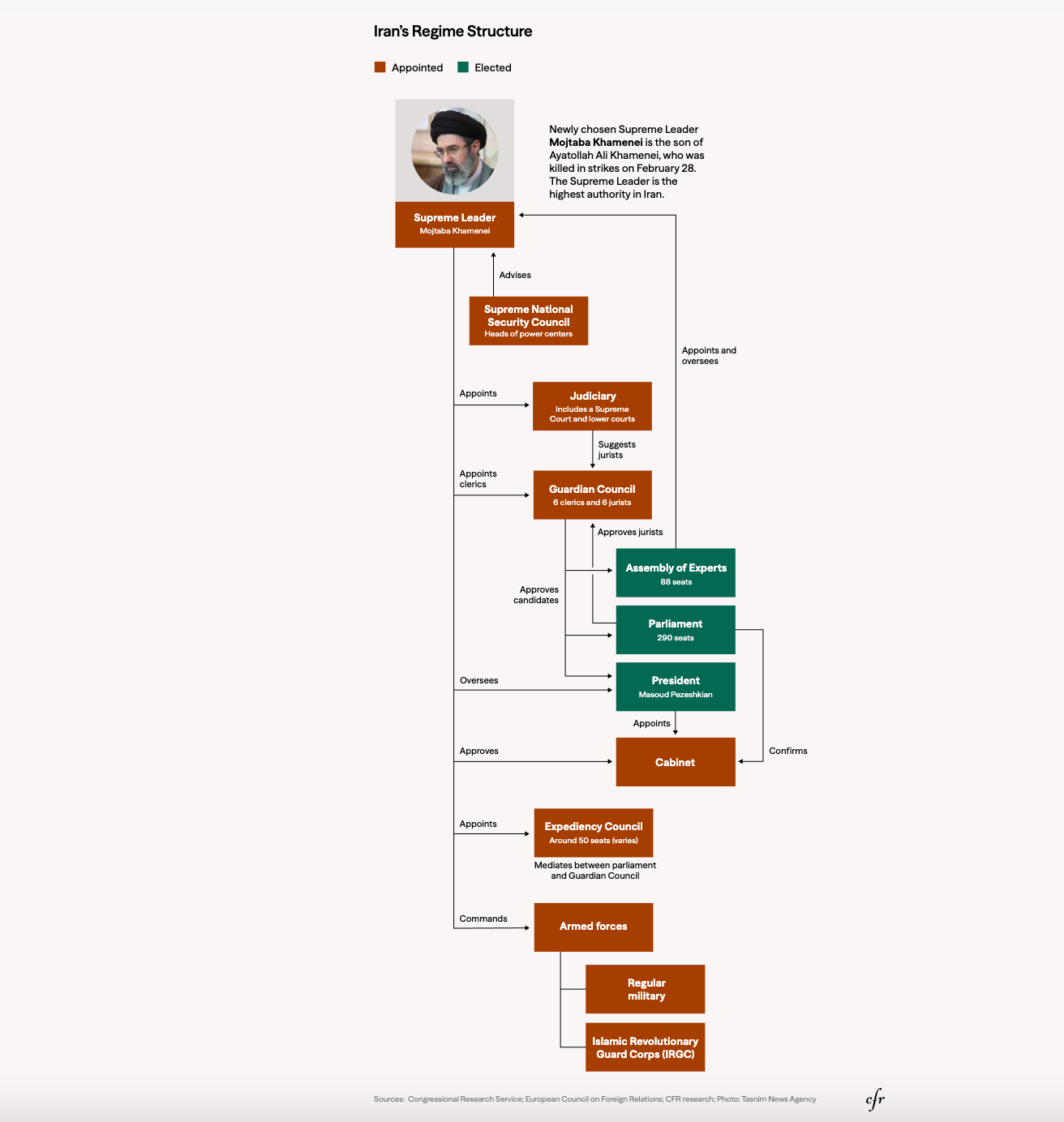
The most consequential effects of this war may unfold not on the external battlefield but inside the Islamic Republic itself. Iran is often portrayed as a monolithic regime, yet in reality it is a system of overlapping power centers: the Supreme Leader’s office, the Islamic Revolutionary Guard Corps (IRGC), the regular military (Artesh), clerical institutions, and charitable foundations and commercial entities (e.g., Setad) that finance elite loyalty. For more than three decades, Ayatollah Ali Khamenei maintained stability by balancing these competing institutions. His death on February 28 removed the central arbiter of that system at a moment of intense external pressure. What remains is a political structure that may appear resilient but contains multiple internal fault lines.
The regime’s “dual state” structure—a powerful security apparatus centered on the IRGC alongside a weaker formal state—now faces growing stress. When external pressure disrupts the command networks of the security state, the formal bureaucracy lacks the authority to stabilize the system. Reports that some soldiers and IRGC personnel have failed to report for duty amid sustained airstrikes are therefore closely watched indicators of regime strain. Authoritarian systems rarely collapse because infrastructure is destroyed; they collapse when the institutions responsible for enforcing political authority begin to fragment (.e.g., Saddam Hussein).
At the same time, regime decision-making shows signs of increasing volatility. Recent attacks on regional neighbors—including states that had previously served as diplomatic intermediaries advocating de-escalation—suggest a growing reliance on coercive signaling and the expansion of the war’s geographic scope. Such behavior may reflect mounting internal pressure and competing priorities within the regime’s leadership during wartime. Analysts seeking to gauge whether endurance is giving way to fracture should therefore monitor several indicators: disruption of centralized command, absenteeism within security institutions, and weakening coordination between Tehran and its regional proxy networks.
IV. The Mojtaba Gamble
The elevation of Mojtaba Khamenei marks a profound structural shift inside the Islamic Republic. Unlike his father, Mojtaba lacks the clerical authority traditionally associated with the office of Supreme Leader. Nor is he a commander within the Islamic Revolutionary Guard Corps (IRGC). His authority instead rests on a fragile political compromise between institutions that historically competed for influence. In effect, the succession accelerates a transformation already underway: the evolution of the Islamic Republic from a clerical revolutionary system into a security-dominated political order.
Behind the symbolism of continuity lies a more complex reality. Many analysts believe the balance of power has shifted decisively toward the IRGC, which played a central role in shaping the succession and now represents the regime’s true center of gravity. In this configuration, Mojtaba functions less as an independent religious authority than as a political intermediary figure between Iran’s clerical institutions and its security establishment—preserving the appearance of the Islamic Republic’s traditional hierarchy even as real decision-making becomes increasingly concentrated in the hands of the military elite.
The symbolism of this transition is striking. A revolution founded on opposition to hereditary monarchy now risks appearing dynastic, reinforcing perceptions that the system is sustained less by ideological legitimacy than by networks of coercive power. The regime has attempted to mitigate this legitimacy deficit by framing Mojtaba’s rise within a narrative of wartime resistance and revolutionary continuity. Yet a leader whose authority depends on the cohesion of the security apparatus risks becoming captive to it. Under sustained external pressure, competition within the regime’s security elite could transform Mojtaba’s succession from a moment of consolidation into a catalyst for institutional fracture.
V. Strategic Priorities for Washington
Tehran’s response has not been a conventional counteroffensive but a doctrine of strategic endurance—absorbing military punishment while imposing economic pressure on the coalition confronting it. To counter this strategy, U.S. policy must move beyond punitive strikes toward a doctrine of regeneration denial. In strategic terms, the objective is not simply to destroy Iranian capabilities but to deny the regime the institutional resilience required to sustain its strategy of endurance.
This includes missile production facilities, launch infrastructure, and command networks. At the same time, protecting the global energy system must remain a central strategic priority. Securing Gulf energy flows through integrated missile defense, maritime security operations, and infrastructure protection will deny Tehran its most effective form of leverage.
Diplomacy, if it occurs, should follow rather than precede the establishment of battlefield leverage and must address the broader architecture of Iranian power—missile programs, proxy networks, and maritime coercion capabilities. Concurrently, Washington should quietly exploit emerging tensions within Iran’s political system, widening contradictions between security institutions, clerical elites, and the formal bureaucracy. The objective is not immediate regime collapse but cumulative institutional fracture under sustained pressure.
VI. Conclusion: The Strategic Choice
The primary danger facing the United States today is not a lack of military power but a failure of strategic persistence. Washington must navigate a narrow corridor between two strategic failures: ending the campaign prematurely—allowing Tehran to frame mere survival as a victory of resistance—or expanding the conflict into a broader regional quagmire. Iran’s leaders are betting that time and economic pressure will fracture Western political cohesion before the Islamic Republic’s own system begins to crack. That calculation reflects a deeper ideological assumption rooted in Iran’s experience during the Iran-Iraq War: that democratic societies ultimately tire of prolonged conflict more quickly than authoritarian systems. Iranian strategy therefore emphasizes endurance, resistance, and patience—not to defeat adversaries outright on the battlefield, but to outlast their political will.
Yet endurance strategies are only as durable as the institutions that sustain them. If Washington maintains sustained pressure on Iran’s military capabilities while simultaneously widening the fault lines within its political and security structures, Tehran’s greatest strength—its capacity to endure—may ultimately become its greatest vulnerability. The strategic objective is therefore not simply military victory but the gradual erosion of the regime’s ability to convert endurance into leverage. That is the war the United States must aim to win.